






AI Learns Every Scene. You See What Matters
Robotics Turns Your Sight 
Context-driven AI video patrols
The AI learns from the scene captured by each camera and builds a statistical baseline of what is usual in that camera’s operating context. It analyses the video streams in parallel and flags deviations for an operator to assess. Teams can add targeted checks in plain language. Processing, storage and AI agents stay on site.
Dott. Maurizio Ognibene
I integrate AI video analytics into video patrols. Inspection robotics extends observation to the point of the event.
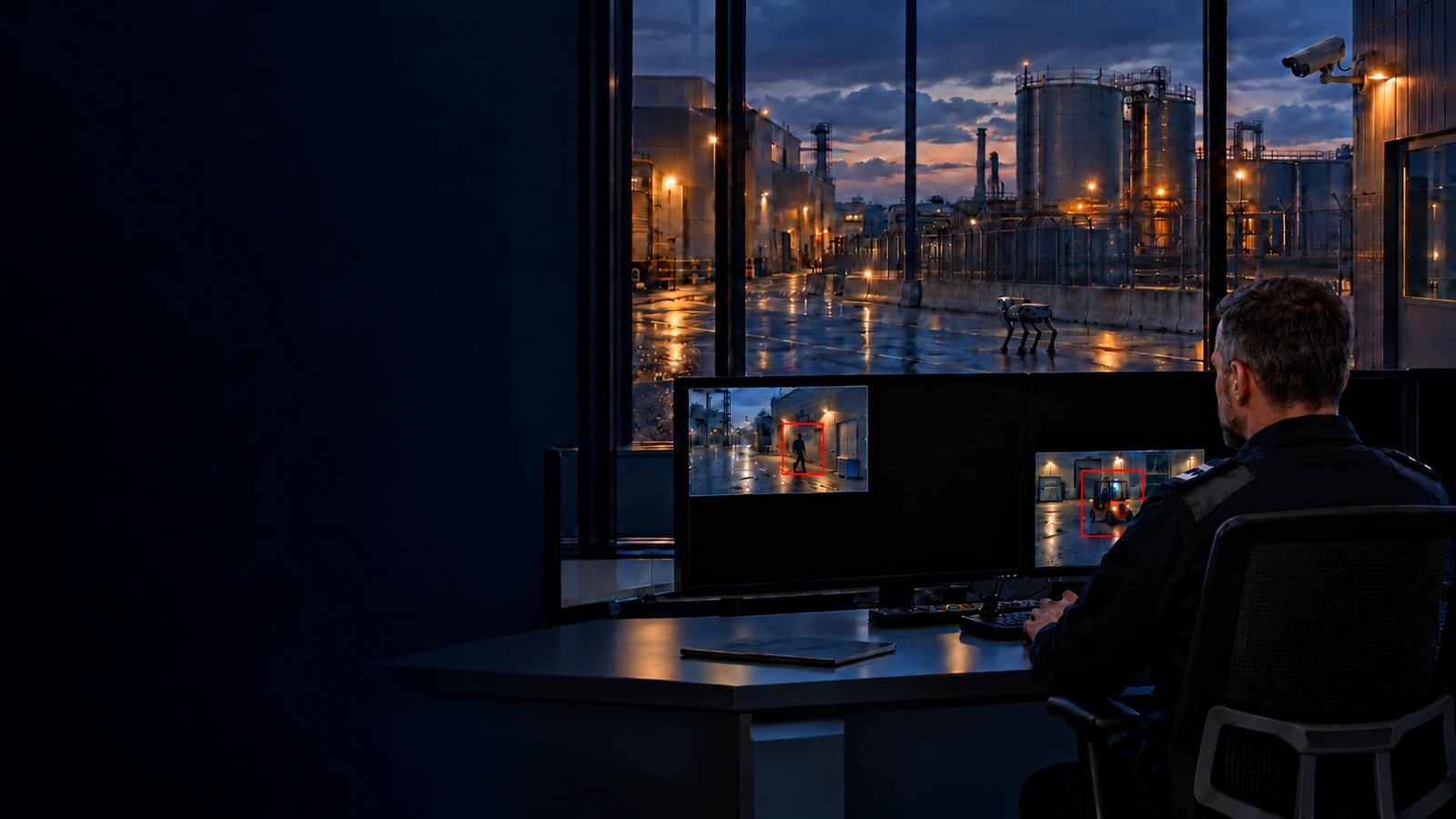
Two kinds of control room. One focus on unusual events
Security monitoring centres oversee customer sites and coordinate responses under the security provider’s procedures. In-house control rooms monitor their own sites and coordinate with the people responsible for security.
Explore both operating contextsFrom event-driven to context-driven patrols
A situational video patrol learns what is usual for each camera. It can surface a deviation before anyone defines a specific event to look for. Plain-language criteria add checks for events that matter to the team.
How the analytics workBuilt around your existing CCTV
Compatible CCTV cameras can remain in service without replacement, upgrades or onboard AI. We verify the actual video streams and their connection to the existing video management system (VMS) or network video recorders (NVRs). Capacity grows by adding servers as the number of video streams or sites increases.
On-premises architectureMobile observation at the point of the event
Autonomous inspection robotics extends the same video analytics layer with mobile cameras and sensors. The device and supply model, including Robotics as a Service (RaaS), are selected with the client. Availability, interfaces, site suitability and testing are confirmed for each project.
How robotics fits inFrom operational requirements to field testing
I assess the operating context, define requirements with the client, coordinate selected providers and oversee testing, integration and follow-up. Reusing compatible cameras and adding capacity in modules can help control costs.
Explore the project methodOperator interface
Black Screen Technology
The video wall stays mostly dark. The panes that light up show statistically unusual events, with a red outline around the area for the operator to assess.
Before: continuous viewing of video panes
After: attention on unusual events
Frequently asked questions
Who is this for?
Security providers’ monitoring centres and organisations that operate their own control rooms.
See detailsHow does context-driven detection work?
The AI learns from the scene captured by each camera and builds a statistical baseline of what is usual in that camera’s operating context. It analyses the video streams in parallel and flags deviations for an operator to assess.
See detailsCan I use my existing cameras?
Compatible CCTV cameras can remain in service without replacement, upgrades or onboard AI. We verify the actual video streams and their connection to the existing video management system (VMS) or network video recorders (NVRs).
See detailsWhat can the team specify in plain language?
Teams can describe targeted criteria for live video. These checks supplement native anomaly detection, which already learns a baseline for each camera.
See detailsWhere do the video streams and AI agents run?
Video analytics and storage run on dedicated on-premises servers. The AI agents run on a separate local server. Video streams are processed on site throughout the analytics workflow.
See detailsHow does the inspection robot fit in?
Autonomous inspection robotics extends the same video analytics layer with mobile cameras and sensors. The device and supply model, including Robotics as a Service (RaaS), are selected with the client. Availability, interfaces, site suitability and testing are confirmed for each project.
See detailsHow do you choose technology providers?
I work with selected specialist providers and assess which configuration fits your operating requirements. I coordinate their work with the client, from requirements through field testing and integration.
See detailsWhich suppliers or product names do you disclose?
Supplier and product details are reserved for the appropriate project discussions. The site explains the functions, project requirements and integration process.
See detailsHow does the first integration affect my costs?
For the initial supply and integration, the technology provider pays for my agreed professional work. The client pays for the technology, equipment and services quoted by the provider. Later studies, refinements or operator training outside the initial scope are quoted separately when they are not covered by a subsequent supply agreement.
See detailsHow do I arrange an initial meeting?
Book a 30-minute appointment, call or email. The discussion starts with your site, video streams and current patrols.
See details